The New London Day scrapped their online version of this story...but that doesn't mean we can't look and see what our radio writers came up with.
Navy Version 1:
Everyone wins if the Navy accepts Connecticut's offer of $7.65 million for construction projects in Groton. If they say yes, the Navy can fufil their hopes of improving their shore infrastructure while Connecticut helps to keep them afloat.
According to a Navy spokeswoman, Connecticut is the first state to provide the Navy with money for construction purposes. And if the Navy accepts, $4.65 million would be used to upgrade the base's facility for its divers. The remainder would go toward replacing the aging boilers at the base power plant.
In 2005, the Pentagon tried closing the base, but an independent comission overruled this possibility. But now, Gov. Jodi Rell is doing all she can to help the submarine base stay afloat stating that it has an annual economic impact that can be measured in billions of dollars.
Now it is up to the Navy to decide whether to accept the money for the state or not. But Justin Bernier, an executive director of the state's Office of Miliary Affairs, assures us that its just a matter of moving some paperwork back and forth. "These things just take time," he said. Hopefully we will see some improvements in the near future.
Navy Version 2:
The state of Connecticut today offered the Naval Submarine Base $7.65 million for construction projects. [Quote:] "This is really unique," Lt. Laura Stegherr said Monday. "We need to reinvest and recapitalize our shore infrastructure, and a grant such as this could provide a mutual benefit to the state and the installation."Of that $7.65 million, $4.65 million would be used to upgrade the base's facility for its divers and the remainder would go toward replacing the aging boilers at the base power plant.
The $7.65 million is “still under consideration by the Navy,” Stegherr said, because the state has not yet approached Navy officials with the offer. The Navy decides on a case-by-case basis whether to accept money from a state. [Quote:] "The submarine base has an annual economic impact that can be measured in billions of dollars, and we want to do all we can to keep it off of future closure lists," Governor Rell said in a statement.
Navy Version 3:
The Naval Submarine Base in Groton may get a face lift. The state of Connecticut has approved $7.65 million in grants for construction at the base. The grants are part of $40 million the state legislature approved for base improvements in 2007. Governor M. Jodi Rell decided to expend part of those funds for diving facility upgrades and to replace boilers at the base power plant.
In 2005 the Pentagon considered closing the base but was overruled by an independent commission. Rell hopes investing the base will help keep it open saying it has an annual impact on the state upwards of a billion dollars. The Navy decides on a case-by-case basis whether to accept money from a state.
Currently Connecticut’s offer is still being considered by the Navy. Justin Bernier of the State Office of Military Affairs said the state is finalizing a deal with the Navy that stipulates how the money can be spent. Bernier said that now it is “just a matter of paperwork” that he expects will be complete in a few weeks.
Tuesday, February 10, 2009


Stories Written on a Snowy Night Part 2: UConn
Here's the orignial UConn story. This one had fewer "quotes" to paraphrase - it was more a matter of re-organizing content.
UConn Version 1:
A proposed partnership between the University of Connecticut Health Center and Hartford Hospital could end the Health Center's practice of seeking state money to cover deficits. The Center would, however, still require ongoing state funding for bonding and labor costs.
This proposed partnership would include a new "University Hospital" with two campuses, a new 250 bed hospital to replace John Dempsey Hospital, and a plan to maintain Health Center employee's status as state employees. However, now the state would pay the difference between the employee's fringe benefits costs and those of other hospital employees.
Challenges facing this partnership include reuniting the unionized Health Center and nonunion Hartford Hospital, and dealing with the dire financial situation of the state, with the projected budget deficit in the billions. When asked about these issues, Representative Roberta Willis of the Higher Education Committee, took a deep breath and said, [Quote:] "Did you hear my deep breath?"
UConn Version 2:
UConn Version 1:
A proposed partnership between the University of Connecticut Health Center and Hartford Hospital could end the Health Center's practice of seeking state money to cover deficits. The Center would, however, still require ongoing state funding for bonding and labor costs.
This proposed partnership would include a new "University Hospital" with two campuses, a new 250 bed hospital to replace John Dempsey Hospital, and a plan to maintain Health Center employee's status as state employees. However, now the state would pay the difference between the employee's fringe benefits costs and those of other hospital employees.
Challenges facing this partnership include reuniting the unionized Health Center and nonunion Hartford Hospital, and dealing with the dire financial situation of the state, with the projected budget deficit in the billions. When asked about these issues, Representative Roberta Willis of the Higher Education Committee, took a deep breath and said, [Quote:] "Did you hear my deep breath?"
UConn Version 2:
UConn Health Center Hartford Hospital Merger May Require State FundingThe University of Connecticut Health Center could end to seek state money for covering its deficits by merging with Hartford Hospital. According to a report by the independent Connecticut Academy of Science and Engineering issued this morning, the details of the proposed partnership includes:
• Creating a "University Hospital" with two campuses, UConn's John Dempsey Hospital and Hartford Hospital.
• Building a new, 250-bed hospital to replace John Dempsey Hospital. The state would pay the bonding costs for the project and the cost of any new equipment. In the past, the cost has been estimated at $475 million.
• Maintaining Health Center employees' status as state employees. However, the state will pay the difference between their fringe benefits costs and those of other hospital employees which amounts to millions of dollars a year.
• Collaborating with other area hospitals to increase their involvement with UConn's medical and dental schools, with access to students, interns and residents and research.
With the proposed partnership, the UConn Health Center would have financially stabilize, not have to rely on cash infusions from the state legislature to stay afloat in recent years. It could significantly change the healthcare landscape in the region and be transformed into part of a major academic medical center.
It would also replace the existing Dempsey Hospital without significantly adding to the number of hospital beds, and create a two-campus University Hospital. At present, the UConn Health Center is one of the nation's smallest academic hospitals, including the state's medical and dental schools, research laboratories and the 224-bed John Dempsey Hospital. Its hospital is very small and outdated, but has many commercial advantages due to located in the prosperous Farmington valley. Representative of both UConn and Hartford Hospital's parent company would lead this corporation. This is a result of many discussions of the state lawmakers about challenges of the potential partnership for last 2 years.
UConn Version 3:
A new report says a partnership with Hartford Hospital could keep the UConn Health Center from seeking state funds for it's deficits. But, the report by the Connecticut Academy of Science and Engineering says the hospital would still require ongoing state funding for bonding and labor costs. The plan will be unveiled to state lawmakers today.
It includes the creation of a "University Hospital" with two campuses at UConn's John Dempsey Hospital and Hartford Hospital. It also proposes the construction of a new 250-bed hospital to replace Dempsey, paid for by state bonding. Under the plan, Health Center workers would remain state employees, but the state would pick of the differences in fringe benefits costs between them and Hartford Hospital employees.
The partnership is intended to stabilize the UConn Health Center, which has relied on cash infusions from the state legislature to stay afloat in recent years.
Stories Written on a Snowy Night Part 1: Daschle
Here's the original NY Times Story, followed by three re-writes for radio.
1. What works about these stories...and what doesn't?
2. What are the key things we need to change about the print story to make it right "for the ear?"
3. How do we choose to include or exclude information?
Daschle Withdraws Version 1:
Tom Daschle followed Nancy Killefer’s lead today. Daschle withdrew his nomination for Secretary of Health and Human Services. Although the media and certain members of congress have scrutinized Daschle’s income tax issues, as recently as yesterday, it looked as though his nomination was going to pass.
Yesterday Mr. Daschle discussed his remorse over failure to pay approximately $140,000 in taxes on time, but he assured the public he would continue to move forward with his nomination.
Mr. Daschle and President Obama jointly announced Daschle’s withdraw today. The move came just a day following a push for Daschle’s appointment from Massachusetts senator, Edward M. Kennedy, and Montana senator, Max Baucus, who happens to run the Senate Finance Committee. President Obama also voiced support for Mr. Daschle yesterday and today said he accepted the withdrawal “with sadness and regret.”
President Obama says it is now time to move forward. He appeared on ABC’s Nightly News to say he “screwed up.” Daschle’s withdrawal came only hours after chief White House performance officer nominee, Nancy Killefer, removed her name from the running. Like Daschel, Killefer had tax issues of her own surface after failure to pay unemployment taxes.White House spokesman, Robert Gibbs, said today, the White House did not influence either of their decisions to withdraw.
Version 2:
President Barack Obama has lost another cabinet nominee to unpaid taxes. Tom Daschle withdrew his name from nomination for Secretary of Health and Human Services Tuesday after news of $140,000 in unpaid income taxes surfaced.
Obama initially said he would stand behind Daschle, but admitted he made a mistake in an interview with NBC’s “Nightly News.” He said it is not his mistakes that matter it is admitting them and not repeating them that counts.
Hours before Daschle gave up his nomination Nancy Killefer who was up for chief White House performance officer pulled out on the grounds of unpaid taxes as well. Treasury Secretary Timothy F. Geithner was also found to have $34,000 in unpaid taxes. All of the nominees have since paid off their tax debt. Geithner has already been confirmed, but a White House spokesperson said the administration has begun the process of replacing Daschle and Killefer.
Version 3:
Tom Daschle has withdrawn his nomination to be secretary of health and human services. The former Senator has undergone scrutiny for failure to pay taxes. The move is a blow to the Obama administration, which has set a goal of higher "ethical standards" in government, only to encounter several scandals involving appointees.
President Obama gave several national TV interviews Tuesday, saying that he "screwed up" by pushing the appointment. Daschle is one of Obama's closest confidants, and worked to get him elected. He decided to withdraw, saying that he had become a "distraction" and that he could not lead White House efforts to reform the health care system.
Among those mentioned as possible candidates for the job of health secretary are Governor Kathleen Sebelius of Kansas, a former state insurance commissioner; former Governor and physician John Kitzhaber of Oregon, and Gov. Jennifer Granholm of Michigan.
Only two hours before Daschle withdrew, Nancy Killifer, Obama's choice to be "Chief White House Performance Officer" pulled out of consideration for the job because of unpaid taxes on a household employee.
Republicans have criticized the nominees for not adhering to tax law, while the administration negotiates new economic policies.
Perennial problems: "I" and "Hello..."
I wanted to post now about two exciting ideas we'll be working on later this semester. The first, a manifesto by radio reporter Sean Cole tackles the always dicey subject of "first person" reporting. It's something I grew up in this business trying to avoid (for no good reason, mind you) only to find that it can be one of the best tools in the arsenal of any reporter.

Sean is unquestionably one of the most talented radio reporters in America, and has really great reasons for placing himself in stories. Once we hit the serious "feature" reporting part of our class, we'll be revisiting his ideas.
Another problem reporters often face is addressed in this perfectly titled piece by Jen Nathan: "Sticking Your Microphone Where it Doesn't Belong." Once we start getting out into the world with our digital recorders, you'll see what we're talking about. It can be difficult knowing how, and when to prompt people for information...and then when to prompt them for even more. Remember - you're a reporter...you're used to asking questions. Most of your interview subjects are rarely, if ever interviewed.
We'll be chatting about this in a few weeks as well.
Tuesday, February 03, 2009
Snowy night assignment
If you've joined me for tonight's "Writing for the Ear" - thanks...hope everyone is warm and safe.
Next week, we're going to start on the first real section of the class: Newscast writing. It's where we learn to quickly write in a broadcast style...on deadline. We'll be training on the AP/ENPS system, and begin writing assignments in class.
Tonight, we're going to show an example of this kind of writing, and have you try to replicate it. So, if you took notes last week, and you read the first few chapters in the book (especially #3 "Writing for Broadcast") you have a sense of what's different about radio writing from say, what you read in the newspaper.
For one example, check out the opening to chapter 3, where we compare a paragraph in the Washington Post to the style used by NPR in the same story. For a more current example, here's The Hartford Courant's version of a story about (our favorite) Mayor Eddie Perez in court today:
Mayor Eddie A. Perez pleaded not guilty to bribery charges in Superior Court in Hartford this morning and asked that his case go immediately to trial. Instead, his case was continued to March 3.
Also this morning, former city employee Edward Lazu pleaded not guilty to bribery and second-degree forgery charges.
Perez's mother, his wife Maria and his lawyer, Hubert J. Santos, accompanied him to court this morning. The mayor was arrested last Tuesday and charged with bribery, fabricating evidence and conspiracy to fabricate evidence in connection with allegedly deeply discounted work done at his home by city contractor Carlos Costa, owner of USA Contractors.
The case against Perez is connected to roughly $20,000 he paid Costa for a new kitchen counter and a renovated bathroom. Costa was arrested last Monday and charged with bribery, fabricating evidence and conspiracy to fabricate evidence. As Costa worked on the $7.3 million Park Street project, he also worked on the mayor's Bloomfield Avenue house beginning in 2005. He did so without proper permits, and some of the work was done by an unlicensed contractor. The work was completed in 2006, and Perez has said he did not pay Costa for the work — estimated to be worth $40,000 — until July 2007.
Echoing what he said after investigators executed a search warrant on his home in August 2007, Perez called his decision to hire Costa a "lapse in judgment."
"There is no excuse for it. I apologize for putting my family and my city under this situation," Perez said. But he added, "At the end of the day, a lapse in judgment is not a crime."
Lazu was also arrested last Tuesday and charged with one count of receiving a bribe and two counts of second-degree forgery. As a city contract compliance supervisor, Lazu was in charge of overseeing the employee who monitored Costa's work on Park Street. But state investigators also have asked questions about a driveway that Costa partially built for Lazu in 2004. Lazu paid Costa $1,100 to begin work on the driveway at Lazu's Broadview Terrace house, Brown has said. Costa did some work until a neighbor complained, and the work was never completed.
State criminal investigators have been looking into allegations of political corruption in the mayor's administration since early 2007, seeking documents and secret testimony and forming an investigatory grand jury in October 2007.
Now, here's the same story, written by WNPR's Anna Sale today:
Hartford mayor Eddie Perez pled not guilty to charges of bribery and fabricating evidence on Tuesday, and his attorney made clear he wants to move swiftly onto a trial.
Perez did not speak during his 5-minute arraignment in Superior Court, but his lawyer Hubert Santos told Judge Julia Dewey that the mayor wants to get right to fighting the charges against him.
"We would ask for an immediate trial, your honor. We're prepared to go to trial today."
But state prosecutor Christopher Alexy told the judge that the state has amassed a dozen bankers boxes of evidence that he thinks the defense may want to review before trial.
Judge Dewey agreed, and asked both sides to work with a court scheduler to set a "realistic date" for trial. She scheduled a pretrial conference for March 3.
Mayor Eddie Perez was arrested last week after a more than a year-long grand jury investigation. State prosecutors allege that Perez took a bribe when he had a city contractor renovate his home in 2005.
Perez did not pay for the work until two years later, after investigators questioned him about it. Prosecutors say that $20,000 payment only covered about half of the value of the kitchen and bathroom upgrades.
Perez has apologized for hiring the city contractor for work on his home, but denies that he broke any law. He says he has no plans to resign.
So, what's different about these two stories? One's shorter, of course, one has more detail. But what is it about the writing that's different? If you've read far enough in the book, and listened to some broadcast news, you have a pretty good idea. I have for you a few very simple re-writing excercises to do for next week. I'm going to give you some links to print versions of stories, that I'd like for you to re-write in a more radio-friendly way. That means:
1. Shorter sentences.
2. Paraphrase the quotes (or soundbites) into your own words.
3. Write the way you speak.
These stories should flow, and make sense as read. Make sure that when you read these stories, they're no more than one minute long each. If you have questions about how to do this, you'll find most of them in that marvelous chapter 3...and some of the "Basic Rules" we talked about last week. Please post them to the comments section of this blog post. I'll give you until tomorrow evening, since we're getting a late start. Then, we'll go over next week. Here are the selections...and have fun:
Daschle Withdraws
http://www.nytimes.com/2009/02/04/us/politics/04obama.html?_r=1&hp
Hospital Merger
http://www.courant.com/news/health/hc-webuconn0204feb04,0,1851156.story
State to help Sub Base
http://www.theday.com/re.aspx?re=40c9f0a7-f5ed-4c5d-8727-a8b272c67dd0
Tuesday, January 27, 2009
Busy news day to kick things off
As we dive into our Spring semester of "Writing for the Ear," I have to admit. I'm not really thinking all that much about class. Sorry. That's what happens when you do the news, and a really big story hits, that shakes up your day. That's pretty much what happened today with the arrest of Hartford Mayor Eddie Perez.
The good thing about all this? It gives us a chance to hear up to the minute examples of the different kinds of reporting we'll be exploring during class. So, here goes...my sermon about terminology you should know:
If you don't work in the business, it's pretty hard to know what people are talking about when they say things like "copy" or "vo-sot."
Newscast: This could be a lot of things...five minutes of headlines read by a radio reporter at 6 a.m. or maybe a full, half-hour television broadcast, complete with weather and sports. For our purposes, a newscast is: The framework within which we place stories. We'll be talking in later classes about how to "stack" a newscast, or choose the important stories in the right order.
Reader: That's when the newscaster reads news copy (otherwise known as a script) directly to listeners. It's news that he has written himself, and doesn't include any additional outside sound. Many radio stations provide newscasts that are little more than a series of readers, strung together taken from wire service copy. It might look something like this:
The state Supreme Court ordered a new sentence today for a man convicted of shooting a New Haven police officer. The high court unanimously upheld the conviction of Arnold Bell, but found part of a law giving him a stiffer sentence as a persistent dangerous offender unconstitutional.
Scripter: That's when the newscaster reads copy, and inserts a soundbite into the the story. Of course, there's a million ways to refer to the soundbite, like: cut, bite, clip, sound on tape (or SOT), tape (that's pretty old-fashioned), audio, and probably a few I'll forget. Here's the same story, written as a scripter:
The state Supreme Court ordered a new sentence today for a man convicted of shooting a New Haven police officer. The high court unanimously upheld the conviction of Arnold Bell, but found part of a law giving him a stiffer sentence as a persistent dangerous offender unconstitutional. Bell's attorney, Joe Blow said the ruling was a victory:
Bell :12 "...will be vindicated."
Bell was convicted of shooting officer Jane Smith in 2001.
Another name for the scripter is the donut...and it's easy to see why. There's some stuff...then a hole where the soundbite goes, then more stuff. Many TV stations (they call them VO-SOTs, or voiceovers with sound on tape...catchy, no?), and some radio stations dispense with the second bit of "stuff" and just move on to the next story.
Spot (or Wrap): Basically, it's the same idea as a scripter, but a reporter is delivering the story...not a newscaster. A spot is short (for our class, :50 to 1:30) and it usually breaks news. It's the first reporting on a story, and is meant to get the basics out there. That doesn't mean spots can't be full of information. Each spot includes a "Host Lead" or "Host Intro" read by an anchor. It gives a description of what's to come. Here's an example from today by WNPR reporter Anna Sale. First the Host Intro:
Hartford Mayor Eddie Perez was arrested today on charges of bribery and fabricating evidence in connection with renovations at his home by a city contractor. WNPR's Anna Sale reports. Here's the link to the story itself.
Here's another spot from today's coverage by Lucy Nalpathanchil. First, the host intro: While Mayor Eddie Perez maintains his innocence on corruption charges and says he won't resign, Hartford City Council may have a say in Perez's future. WNPR's Lucy Nalpathanchil reports.
Now, the link to hear the story.
It's still a spot that's breaking news...but it's taking a different angle. Some people might call this a "sidebar" story - an old newspaper term. I just call it good reporting...following up on all aspects of an important story.
Feature: This is what you'll be producing by the end of this class. It's a longer story than a spot, although it has some of the same elements (news at the top of the story, background, voices of stakeholders, a conclusion that moves the story forward) as a spot, but takes more time, and provides more depth. Here's a good recent example of a story driven by a need to more fully develop an ongoing news story. And, another example, where we took a "micro" look at a bigger problem.
You can do more listening here to different kinds of stories that fit into these categories.
Okay, now those terms make sense, but we can't do much with them, unless we first explore the "Basic Rules of Broadcast Writing."
For next week - we'll get more depth on these subjects by tearing into our textbook, "Sound Reporting" - and reading the first four chapters.
The good thing about all this? It gives us a chance to hear up to the minute examples of the different kinds of reporting we'll be exploring during class. So, here goes...my sermon about terminology you should know:
If you don't work in the business, it's pretty hard to know what people are talking about when they say things like "copy" or "vo-sot."
Newscast: This could be a lot of things...five minutes of headlines read by a radio reporter at 6 a.m. or maybe a full, half-hour television broadcast, complete with weather and sports. For our purposes, a newscast is: The framework within which we place stories. We'll be talking in later classes about how to "stack" a newscast, or choose the important stories in the right order.
Reader: That's when the newscaster reads news copy (otherwise known as a script) directly to listeners. It's news that he has written himself, and doesn't include any additional outside sound. Many radio stations provide newscasts that are little more than a series of readers, strung together taken from wire service copy. It might look something like this:
The state Supreme Court ordered a new sentence today for a man convicted of shooting a New Haven police officer. The high court unanimously upheld the conviction of Arnold Bell, but found part of a law giving him a stiffer sentence as a persistent dangerous offender unconstitutional.
Scripter: That's when the newscaster reads copy, and inserts a soundbite into the the story. Of course, there's a million ways to refer to the soundbite, like: cut, bite, clip, sound on tape (or SOT), tape (that's pretty old-fashioned), audio, and probably a few I'll forget. Here's the same story, written as a scripter:
The state Supreme Court ordered a new sentence today for a man convicted of shooting a New Haven police officer. The high court unanimously upheld the conviction of Arnold Bell, but found part of a law giving him a stiffer sentence as a persistent dangerous offender unconstitutional. Bell's attorney, Joe Blow said the ruling was a victory:
Bell :12 "...will be vindicated."
Bell was convicted of shooting officer Jane Smith in 2001.
Another name for the scripter is the donut...and it's easy to see why. There's some stuff...then a hole where the soundbite goes, then more stuff. Many TV stations (they call them VO-SOTs, or voiceovers with sound on tape...catchy, no?), and some radio stations dispense with the second bit of "stuff" and just move on to the next story.
Spot (or Wrap): Basically, it's the same idea as a scripter, but a reporter is delivering the story...not a newscaster. A spot is short (for our class, :50 to 1:30) and it usually breaks news. It's the first reporting on a story, and is meant to get the basics out there. That doesn't mean spots can't be full of information. Each spot includes a "Host Lead" or "Host Intro" read by an anchor. It gives a description of what's to come. Here's an example from today by WNPR reporter Anna Sale. First the Host Intro:
Hartford Mayor Eddie Perez was arrested today on charges of bribery and fabricating evidence in connection with renovations at his home by a city contractor. WNPR's Anna Sale reports. Here's the link to the story itself.
Here's another spot from today's coverage by Lucy Nalpathanchil. First, the host intro: While Mayor Eddie Perez maintains his innocence on corruption charges and says he won't resign, Hartford City Council may have a say in Perez's future. WNPR's Lucy Nalpathanchil reports.
Now, the link to hear the story.
It's still a spot that's breaking news...but it's taking a different angle. Some people might call this a "sidebar" story - an old newspaper term. I just call it good reporting...following up on all aspects of an important story.
Feature: This is what you'll be producing by the end of this class. It's a longer story than a spot, although it has some of the same elements (news at the top of the story, background, voices of stakeholders, a conclusion that moves the story forward) as a spot, but takes more time, and provides more depth. Here's a good recent example of a story driven by a need to more fully develop an ongoing news story. And, another example, where we took a "micro" look at a bigger problem.
You can do more listening here to different kinds of stories that fit into these categories.
Okay, now those terms make sense, but we can't do much with them, unless we first explore the "Basic Rules of Broadcast Writing."
For next week - we'll get more depth on these subjects by tearing into our textbook, "Sound Reporting" - and reading the first four chapters.
Saturday, January 17, 2009
Welcome to a new semester!
Classes start on Tuesday the 20th - so I'm getting ready by posting a few things on our class blog for JRN 521 - "Writing for the Ear." This blog is mostly for students in our Quinnipiac University class, but outsiders take a look now and again, too. It's filled with links to stories on public radio, writing tips, and current news events.
The class this semester will be producing work for an ongoing WNPR series "This Economic Life" (sorry Ira Glass) which looks at the changes people are making in a struggling economy. You'll soon get to hear some stories from last semester - production problems at wnpr.org have slowed the presentation of the Fall 2008 stories...but all are still very timely.
You'll also get visits from skilled reporters and producers, like Diane Orson and Catie Talarski.
Below is the syllabus for the class - you should also have access to the text, by NPR's Jonathan Kern, called Sound Reporting.
Looking forward to the fun!
Spring 2009 Writing for the Ear Syllabus
Syllabus//JRN 521B Writing for the Ear//Spring 2009//
Tuesday
Contact Information:
- Work Phone, WNPR: 860-275-7301
- Email (please use both): jkdankosky@quinnipiac.edu, jdankosky@wnpr.org
- Website: http://www.listeninglab.org
Required:
- Sound Reporting: The NPR Guide to Audio Journalism and Production by Jonathan Kern (
- Olympus Digital Recorder (WS-110, WS-311M) – or similar audio recording device that allows for mp3 or WAV recording, and can upload audio via USB. More information: http://www.amazon.com/Olympus-WS-311M-Digital-Recorder-Player/dp/B000VDNC9M/ref=dp_cp_ob_e_title_1
- Audacity Free Audio Software Editor: http://audacity.sourceforge.net/
- Writing News for Broadcast by Edward Bliss Jr. and James L. Hoyt
- Writing Broadcast News: Shorter, Sharper, Stronger by Mervin Block
- Associated Press Broadcast News Handbook
The schedule for this class is free-flowing, according to news events and class progress. You can count on one mid-semester project deadline and one final project due on the last day of class.
Quinnipiac loans professional radio flash recorders, cables and microphones to students on a short-term basis. We will have a tutorial on how to use and sign out this equipment – but the sign-out times present limitations for our class/production schedule. As such, I am suggesting that you purchase a low-cost digital recorder, whose output can interface with Pro Tools digital editing software.
We will also have a tutorial on how to use the AP ENPS system in our newsroom, and the Pro Tools audio editing suites. These tutorials are very important and will require mandatory attendance. I will also briefly be talking about Audacity, a free audio editor, which you can download and use in lieu of Pro Tools – but this software will not be supported by QU staff.
- This course provides an overview of the skills necessary to become a successful broadcast writer, editor and producer. We will examine the basic practices of broadcast journalism, and the differences between commercial and public radio, print and television, and documentary news writing. The focus will be on “public radio style” reporting.
- The class will function as a workshop, simulating a radio newsroom. Students will be expected to write on deadline, critique, edit and discuss their work and that of others. This will include writing exercises in class, and reporting assignments outside of class.
- The instructor will serve as editor, helping students shape their work. We will examine the role of editor and the necessary elements for a strong editor/reporter relationship.
- Each class will feature listening sessions, with work by national and local news media. Students will be asked to discuss specific elements in these stories for accuracy and effectiveness. We’ll use these examples to encourage creativity and individual style.
- Students will do field reporting and learn to incorporate recorded sound into their news writing. They will use editing software to craft their final pieces.
- Students will contribute stories to a radio journalism blog and podcast called “The Listening Lab” (www.listeninglab.org). This site will also feature online discussion. It is recommended that you check this site frequently for updates. Note: Classes may be conducted remotely using this site to allow students ample time to report and edit features, and allow for maximum interaction of instructor/editor. The schedule for these remote classes will be subject to change.
- The 15 classes will be broken into thirds. The first third will include tutorials on equipment, lectures on terminology and craft, listening sessions, and deadline writing exercises. The second third will be devoted to the craft of reporting, writing and editing longer form stories. The last third will be devoted to a final project - a public radio style, multi-source news report. This final project will align with one of three ongoing WNPR series: This Economic Life, Regionalization: State of Change or The Changing Face of Connecticut.
- The best student work may be featured on WNPR and wnpr.org.
- We will have occasional guest speakers from the media, academia and politics.
Attendance and Class Participation:
Please attend class regularly, and be on time. Since we’re conducting this class like a newsroom, please treat it as you would a job. Class participation includes discussion, critique and listening sessions. It also includes the daily reading of at least one newspaper, and listening to radio programs as assigned. It’s a news class, so you have to be engaged in the news. Also, when assignments are due for editing, we will have class periods where the instructor will be working one-on-one with students on scripts, and-or audio. Please use this time to do research and writing for class projects. Just like at work, “surfing the web” for personal information during these periods is not acceptable.
We have 15 total classes scheduled, and as previously noted, not all of them will be in our regular classroom. If you have more than three absences or late arrivals you can expect to have your letter grade lowered. The instructor will accept appeals if extenuating circumstances exist.
Grading:
Regular writing exercises and class projects will be critiqued for quality, accuracy, clarity and creativity. These critiques are part of the editor’s job to help you make your work better, but they are not the main indicator of what your letter grade will be. Here’s how the grading works…it’s pretty simple: Assume you have an “A” in the class, unless you…
- Turn in an assignment late
- Turn in an incomplete assignment
- Fail to follow instructions for the assignment
- Turn in factually incorrect information
- Fail to follow the above guidelines for attendance
Refer to the Quinnipiac University Academic Integrity website for information about Academic Integrity and proper student behavior. Students are expected to be familiar with these university policies. Forms of dishonesty include:
- Cheating or helping another to cheat on an exam
- Using a paper authored by someone other than yourself
- Plagiarizing another’s written work (papers or outlines), in full or in part (includes failure to properly cite any or all sources according to MLA style)
- Deliberately distorting information
- Falsifying information (ex - reason for absence)
Students found guilty of any of the above will be subject to sanctions in class, as determined by the professor, and will also be reported to the Academic Integrity Board.
Americans with Disabilities Act:
Friday, December 19, 2008
Cambridge landmark store struggles
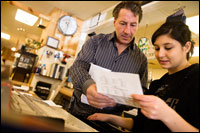
Very soon, I'll be posting the final projects from this semester - our "This Economic Life" series. They were very well reported, and interesting glimpses of how the economic downturn is affecting all walks of life.
A perfect example of this type of reporting today on Morning Edition from Boston reporter Tovia Smith. Bowl & Board is a Cambridge institution, and I've done my share of shopping there. Smith's story tells of the downward cycle of fewer customers meaning less revenue, leading to late payments to vendors, resulting in less stock on the shelves, concluding with unsatisfied customers.
A very real portrait of what a recession does to small businessmen.
Tuesday, November 18, 2008
Final project "This Economic Life"
This week, we start work on our final project, to be included in the WNPR series "This Economic Life." Some stories (especially if the sound quality of the recordings is very good) could end up in part, or in their entirety, on our air. All pieces will be included in a podcast version for wnpr.org. As we've discussed already, here's the project:
Find a story about how the economic downturn is forcing people to make changes in their lives. Maybe it's second jobs, or workforce training...maybe it's small businessmen finding new ways to attract customers...maybe there's an unintended positive consequence of this downturn. An example of this kind of story in print form was in today's Hartford Courant.
The story should include these elements:
1. 4 to 4:30 minutes long
2. At least 3 voices (or sources) in the story, to provide different viewpoints
3. At least one scene - where action, or an interview is happening in a place that helps to tell the story.
Tuesday, October 28, 2008
Thursday, October 09, 2008
More news on economy and election

Today, Tribune papers report on...well, what we've been talking about. John McCain needs to focus on the economy if he wants to win.
Wednesday, October 08, 2008
Lisa Burns on Economy, Education; Greene talks to voters

Here is the audio from our in-class interview with Quinnipiac Media Studies professor Lisa Burns. She talked to us about the economy, and how it's playing out in the presidential race...and gave us some great soundbites for our election stories.
I also wanted to draw your attention to a story by David Greene, NPR White House Correspondent, who's been traveling America, doing just this sort of reporting during the election. Here, he talks to voters in Northeast Pa.
Tuesday, October 07, 2008
Election Assignment #1 - The Spot
The latest polls are showing a lead for Barack Obama over John McCain that is just outside the margain of error - about 5.5 points - heading into tonight's debate. While that number has come down a bit in recent days, it shows considerable support for the Democrat as the financial crisis worsens.
This isn't too surprising...we've been hearing for weeks about how angry people are over the economy, and any attempt to link it's problems to McCain and the Bush administration have worked.
So, that's where we are just before tonight's class - and we've got to formulate a story out of this. It's a pretty typical assignment that an editor would give you:
1. We see a trend, either in the news or in polls.
2. We ask a reporter to go talk to people to get their reaction.
3. We bring in an analyst (or "expert") to put this news into context for us.
Last week, you gathered at least three "vox" interviews from people, getting their feelings about the economy and the Presidential race. We'll start by going over those, and finding some trends in the reporting that we can focus on.
Then, we'll talk with Quinnipiac Communications Professor Lisa Burns. She's an expert on how the media covers politicians, and we'll ask her questions in an informal "press conference" format. We'll see if she's able to comment on some of the trends we see - and some of the voices we've gathered. We'll record her, and post the audio to this space.
Then, you'll need to pick some "sound bites" or "actualities" from the interview with Burns, and from your "vox." You'll write a 1:30 story, complete with host "lead" - as though you were doing it for tonight's newscast, before the debate.
In a perfect world, the story would be formatted something like this:
1. Host Lead...this includes the "news" of the story. What's the "peg?" Why are we telling this story now?
Example: Barack Obama leads John McCain by more than 5 points in national polls heading into tonight's "town-hall" style debate. Polls also show that the economy is the major issue on people's minds, and as ________ reports, that's been good news for Obama.
2. Your story should include two pieces of "vox" tape - either from opposing points of view - or from different types of constituents giving the same point of view. You're not doing scientific work here...you're giving a sense of how people on the street feel, but this is backed up with the numbers you already have from the polls. For instance, if the news is that Obama is leading because people trust him with the economy, your tape should probably reflect that. But, what if it doesn't? Well, it could be a story to highlight some voters who are breaking with the trends.3. Finally, your story should include one "actuality" from Professor Burns, our "expert" voice. She's here to put this in some sort of context - to explain why she thinks voters are thinking this way, or how the media might be influencing their thoughts.
4. Your conclusion - as with any story - should move things forward. What's next? Well, since your story is written to air before tonight's debate, you can peg it to that. But, another interesting way to end a radio story is to save something interesting for the finish. What's the one thing that you heard on the street that really sums this all up? What's the thing that Prof. Burns said that wraps this story up? Listen for these things - not to use as soundbites, necessarily, but to put into your own words at the end of a story.
Tuesday, September 30, 2008
Heading toward election time...and the issues
As we head into our first election assignment, it's kinda funny... I was going to have you ask people what issues are most important as they make their voting decisions for November - but from the polling info we have today, it's pretty clear that people really, really care about the economy.
To this end, we want to find out how people are feeling, and what they want to hear from their lawmakers as they head to the polls. Some sample questions:
"What issues are important to you during this Presidential Election year?"
"Are the candidates addressing these concerns?"
"Is the media talking about economic issues enough?"
"Do you think one candidate or the other has a better plan to help fix the economy?"
"Does the state of the economy influence how you'll vote in November?"
What other questions do we want to ask?
For next week, you'll need at least 3 vox (or "man on the street" interviews) fully transcribed, with first and last names, and the town where the subject lives. You should get enough vox to make sure you have at least two "contrasting" points of view.
Then, next week (October 7th) - Professor Lisa Burns will be here to talk about media coverage of issues, and how she views the messages about the economy coming out of both camps - and Congress. We'll interview her - press conference style - basing our questions on the issues that our interview subjects raise.
We'll write our stories for the following week - and produce them in class on Pro Tools.
To this end, we want to find out how people are feeling, and what they want to hear from their lawmakers as they head to the polls. Some sample questions:
"What issues are important to you during this Presidential Election year?"
"Are the candidates addressing these concerns?"
"Is the media talking about economic issues enough?"
"Do you think one candidate or the other has a better plan to help fix the economy?"
"Does the state of the economy influence how you'll vote in November?"
What other questions do we want to ask?
For next week, you'll need at least 3 vox (or "man on the street" interviews) fully transcribed, with first and last names, and the town where the subject lives. You should get enough vox to make sure you have at least two "contrasting" points of view.
Then, next week (October 7th) - Professor Lisa Burns will be here to talk about media coverage of issues, and how she views the messages about the economy coming out of both camps - and Congress. We'll interview her - press conference style - basing our questions on the issues that our interview subjects raise.
We'll write our stories for the following week - and produce them in class on Pro Tools.
Tuesday, September 23, 2008
"It's the price of living in paradise..."
Some people just know how to "get tape." John Burnett is one of them. Listen to this story, as people try to clean up from Hurricane Ike in Galveston, Texas. It's clear Burnett is trying to paint a picture of people's lives - and what it's really like after the TV crews have left. His choices for "actualities" are startling, funny, gross, and above all ear-catching.
Thursday, September 18, 2008
Where We Live in the news...twice
We'll go through periods in our business where other media seems to pick up quickly on what you're doing. We had one of those weeks. The New Haven Advocate was doing a story about Governor Rell's radio appearances, and asked how often she'd been on to take calls. "Never," I said. So, they wrote about it.
And, the New London Day picked up on our interview with 2nd district congressional candidate Sean Sullivan.
Tuesday, September 16, 2008
Keeping up with speeding particles

David Kestenbaum is the NPR science reporter I talk about often in class. He's always cited by public radio people as an example of a great storyteller, who often works with less than compelling source material. As we debated whether to include the story about the Hadron particle accelerator in our mock newscast, I got to thinking that if Kestenbaum was telling the story, I'd definitely want to hear it. Here's a story he did back in April, as the project was just getting revved up.
Compact Flash Cards and Olympus Recorders

Tonight, QU tech wizard Nancy Hall gives our class a tutorial on how to record sound using the Marantz digital recorders, and how to get that sound on ProTools for editing. We'll need to learn how to use ProTools to produce our projects in class, and the Marantz is one of two approved ways to gather sound.
If you want to use the Marantz in class - remember that Quinnipiac has 48 hour sign out rules. You'll also need to purchase a compact flash card to keep your sound on. Newegg.com is a great place to find cheap computer stuff. You can get compact flash cards for as little as $8 on the site right now. By using the Marantz, you'll be able to use the audio you've gathered directly on ProTools.
There are more steps involved if you want to use your own machine. Newegg.com also has the preferred Olympus recorder for about as little as you're likely to pay (if you look hard, you might save $5). If you decide to buy the Olympus, you'll need to download a file converter onto your home computer, to turn the WMA file you've recorded into a WAV file to use in ProTools. You can easily download dozens of these, but Download.com always works. You'll then need to get that file into ProTools, by thumb drive, cd or some other means.
Tuesday, September 09, 2008
"Sound Reporting" and an intro to AP
Tonight, we really get to tear into this great new Jonathan Kern book about radio news called "Sound Reporting." I want to focus on the first few chapters...an overview called "Sound and Stories," a pretty important chapter on "Fairness" and an introduction to "Writing for Broadcast." I'd like to concentrate on just a few key ideas from each.
In the first chapter, Kern writes that "Radio is intimate." That's probably the best thing to remember about your audience...they're not "all out there." Instead you're talking to one person...telling him (or her) a story you'd like them to hear.
His idea that there "are no headlines" (p. 4) in radio is obvious...so we always try to make sure our "important stories come first and get more airtime." (p.5) (Exercise: Pick out five stories for our newscast, and put them in the right order...it's not aways obvious, and is usually good for some healthy newsroom debate.) How do we figure out what the "important" stories are? See Kern's chapter 10 description in a discussion of "Newscasts" - but better yet, reference Jay Kernis' "Four Tiers of News Coverage."
Despite our best efforts to put the best stories first, some listeners might miss an important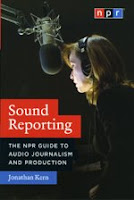 story or two along the way. And, when that happens, they "can't re-listen to a story the way they can a newspaper article." (p. 6) As I've said in class - radio is a linear medium. It keeps going, even if a listener is left behind. It's your job to make sure they don't get left behind.
"Fairness" is an important issue that starts coming up in people's lives in about...well, preschool, and remains important throughout. Although I was often told as a child that "life isn't fair" - that doesn't mean whe shouldn't be trying at all times to be fair in our reporting. In this class, I'll present a few "Codes of Ethics." NPR's talks about "fair, unbiased, accurate, complete and honest" reporting. (p. 9) This very high-minded ideal can be torpedoed by what Kern calls "The Echo Chamber" (p. 10) - the tendency of like-minded journalists to talk amongst themselves, and talk themselves into stories they maybe shouldn't cover...a concept explained on the show On The Media.
Kern gives examples of "getting both sides" (p. 21) of a story...something easier said than done, and often at odds with our need to get news on right now. And, he takes on "loaded language" (p. 23) that is often the result of lazy writing, or reporting or both.
Finally, Kern's chapter on radio writing is far more expansive than my simplified "Basic Rules of Broadcast Writing," but serves the same purpose: To give you tips and hints to keep where you work...and to refer back to again and again.
In the first chapter, Kern writes that "Radio is intimate." That's probably the best thing to remember about your audience...they're not "all out there." Instead you're talking to one person...telling him (or her) a story you'd like them to hear.
His idea that there "are no headlines" (p. 4) in radio is obvious...so we always try to make sure our "important stories come first and get more airtime." (p.5) (Exercise: Pick out five stories for our newscast, and put them in the right order...it's not aways obvious, and is usually good for some healthy newsroom debate.) How do we figure out what the "important" stories are? See Kern's chapter 10 description in a discussion of "Newscasts" - but better yet, reference Jay Kernis' "Four Tiers of News Coverage."
Despite our best efforts to put the best stories first, some listeners might miss an important
 story or two along the way. And, when that happens, they "can't re-listen to a story the way they can a newspaper article." (p. 6) As I've said in class - radio is a linear medium. It keeps going, even if a listener is left behind. It's your job to make sure they don't get left behind.
"Fairness" is an important issue that starts coming up in people's lives in about...well, preschool, and remains important throughout. Although I was often told as a child that "life isn't fair" - that doesn't mean whe shouldn't be trying at all times to be fair in our reporting. In this class, I'll present a few "Codes of Ethics." NPR's talks about "fair, unbiased, accurate, complete and honest" reporting. (p. 9) This very high-minded ideal can be torpedoed by what Kern calls "The Echo Chamber" (p. 10) - the tendency of like-minded journalists to talk amongst themselves, and talk themselves into stories they maybe shouldn't cover...a concept explained on the show On The Media.
Kern gives examples of "getting both sides" (p. 21) of a story...something easier said than done, and often at odds with our need to get news on right now. And, he takes on "loaded language" (p. 23) that is often the result of lazy writing, or reporting or both.
Finally, Kern's chapter on radio writing is far more expansive than my simplified "Basic Rules of Broadcast Writing," but serves the same purpose: To give you tips and hints to keep where you work...and to refer back to again and again.
Subscribe to:
Comments (Atom)